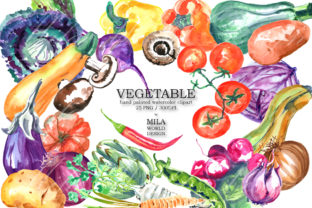
Vegetable Watercolor Clip Art and Illustrations
As a brand designer, I often seek out graphic design assets that can elevate a small business’s visual identity without overwhelming it. Vegetable Watercolor Clip Art is one such asset that offers a fresh, organic feel ideal for local businesses looking to stand out in a crowded market.
The First Impression: A Soft, Natural Vibe
Vegetable Watercolor Clip Art immediately evokes a sense of warmth and approachability. The soft, hand-drawn style suggests a friendly, handmade business personality. This makes it perfect for food-related brands, such as a local bakery or a natural skincare line. It feels organic and authentic, which aligns well with the values of many small businesses today.
Depending on the specific illustrations included, the mood can range from whimsical to elegant. Some pieces may lean into a rustic charm, while others offer a more refined aesthetic. This versatility allows for a wide range of applications across different industries.
Real-World Applications for Local Businesses
Vegetable Watercolor Clip Art can be used in a variety of real-world design situations. For example, when working on a product label for a handmade soap business, these illustrations add a touch of creativity and personality that sets the brand apart. They also work well in packaging design, where they can serve as subtle accents that enhance the overall look without distracting from the main message.
These illustrations are also great for social media graphics and website banners. When paired with a clean font, they create a balanced visual hierarchy that draws attention without being overwhelming. In a Canva template, they can be easily integrated into marketing visuals, helping small business owners create professional branding materials quickly.
Supporting Business Presentation
Using Vegetable Watercolor Clip Art in a brand identity project can significantly improve a business’s presentation. It helps create a stronger first impression by adding a unique visual element that reflects the brand’s personality. This can lead to better product recognition, as customers begin to associate the artwork with the brand over time.
It also contributes to a more consistent brand identity. When used across different touchpoints—such as packaging, social media, and promotional ads—it reinforces the brand’s message and builds trust with customers. Additionally, the soft, artistic style can make packaging more appealing on the shelf, increasing the likelihood of purchase.
Where Vegetable Watercolor Clip Art Shines
This graphic design asset works best in areas where visual appeal is key. Product labels, for instance, can benefit from a watercolor illustration that adds character without cluttering the design. Similarly, promotional banners and seasonal campaign visuals can use these illustrations to create a cohesive theme that resonates with the target audience.
In a boutique setting, Vegetable Watercolor Clip Art can be used to create decorative brand elements that enhance the in-store experience. It also works well in printable design elements like thank-you cards or stickers, offering a personal touch that connects with customers on a deeper level.
When to Use It Carefully
While Vegetable Watercolor Clip Art is versatile, there are situations where it may not be the best choice. For formal corporate branding, the style might feel too casual or unstructured. In very small labels, the details could become lost, making the design less effective.
Additionally, in layouts that are already busy or contain a lot of text, the illustrations may compete with the important information. It’s also not ideal for low-contrast backgrounds or luxury minimalist brands that prioritize simplicity and clarity over decorative elements.
Practical Designer Notes
Before finalizing any design, I always recommend testing Vegetable Watercolor Clip Art on real packaging mockups. This helps visualize how the illustrations will appear in the final product. Checking black and white usage is also important, as some designs may lose their impact when converted to grayscale.
Previewing the clipart on small labels ensures that the details remain visible at scale. Testing it with brand colors helps maintain consistency, while comparing it with competitor packaging highlights its unique value. Reviewing PNG transparency and inspecting SVG editability ensures that the design can be adapted as needed.
It’s also wise to test the illustrations beside different font styles—serif, sans serif, script, handwritten, or display—to see how they interact visually. Finally, always confirm that the commercial license covers the intended use, especially if the asset will be used for client work or physical product sales.
Conclusion: A Versatile Tool for Small Business Branding
Vegetable Watercolor Clip Art is a valuable addition to any small business branding toolkit. Whether used in product labeling, packaging design, or social media graphics, it brings a fresh, artistic energy that can elevate a brand’s visual presence. Its ability to support a strong visual hierarchy and build customer trust makes it an essential part of modern design strategy.